
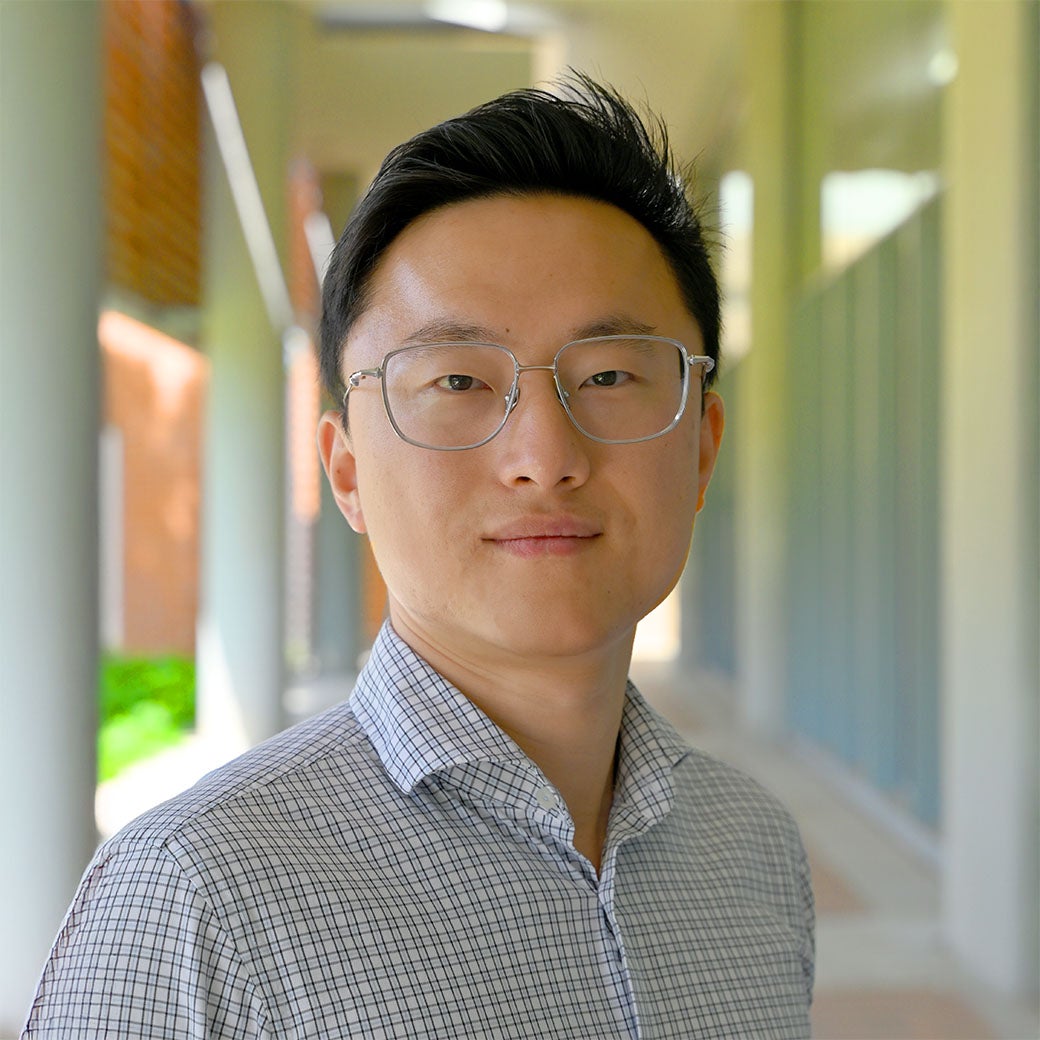
Dr. Haotian Wang is a Professor in the Department of Chemical and Biomolecular Engineering at Rice University. He serves the inaugural Dean Fellow for Sustainability in the School of Engineering and Computing. He is the cofounder and chief scientist of Solidec, a carbon capture and chemicals and fuels production company. He serves as the associate editor of Nano Letters. He obtained his PhD degree in the Department of Applied Physics at Stanford University in 2016 and his Bachelor of Science in Physics at the University of Science and Technology of China in 2011. In 2016 he received the Rowland Fellowship and began his independent research career at Harvard as a principal investigator. He was awarded the 2026 ACS Marks-Ipatieff Award in Catalysis, 2025 Welch Foundation Norman Hackerman Award, 2024 Asian American Academy of Science and Engineering Rising Star Award, 2021 Sloan Fellow, 2020 Packard Fellow, 2019 CIFAR Azrieli Global Scholar, 2019 Forbes 30 Under 30, highly cited researchers, etc. His research group has been focused on developing novel nanomaterials and electrolysis systems for energy and environmental applications including energy storage, carbon capture and utilization, chemical/fuel generation, critical materials recovery, and water treatment.
The Wang Group (CAT Group) at Rice University, led by Prof. Haotian Wang, develops advanced catalysts, nanomaterials, and electrochemical reactors and systems for sustainable energy and environmental applications. The group's research focuses on carbon dioxide capture and conversion, clean fuel and chemical production, battery recycling, water treatment, and renewable energy technologies. By combining fundamental studies of catalysis with scalable reactor and materials design, the Wang Group aims to create practical solutions for decarbonization and the circular carbon economy. The group has pioneered breakthroughs in single-atom catalysis, CO2 electrolysis, and electrochemical synthesis, translating scientific discoveries into real-world technologies through both academic research and commercialization efforts.